CrowdJustice was founded on the idea that the rich shouldn’t be the only ones with access to the legal system. The crowdfunding platform launched in the United States yesterday with a campaign to raise funds for two Yemeni brothers caught in the crosshairs of President Trump’s executive order on immigration.
Author Archives: Jessica McKenzie
Civicist: How Civic Activists Counter Fake News in Taiwan
In 2014, the Daily Mail published a story about a dystopian Beijing in which the smog is so bad that residents flock to outdoor screens to watch digital sunrises. Time, CBS, and the Huffington Post picked up the story. Only, as a Tech in Asia reporter wrote several days later, the story wasn’t true.
Stories like these run rampant on Taiwanese social media, and in 2013 several members of the online-offline civic movement g0v.tw built a browser extension called News Helper for crowdsourcing the identification of fake news. As of December, more than 17,000 people currently have installed the extension on either Chrome or Firefox.
Civicist: How a Broad Coalition Pushed for the Regulatory End of the Muslim Registry We Already Had
On Thursday the Obama administration announced the elimination of the regulatory underpinning of a post-September-11 national registry program for “certain nonimmigrants.” Although the program, the National Security Entry-Exit Registration System (NSEERS), had not been active since 2011, many worried that it could have been rebooted under a Trump administration as Trump’s promised Muslim registry, and the announcement followed a targeted campaign around the issue by a coalition of groups, including MoveOn.
“This is a win,” MoveOn campaign director Iram Ali said Thursday. “I can’t even remember the last time Muslim communities have had a win so, it’s a huge deal.”
Civicist: Recharging the Brigade: Code for America’s Challenge
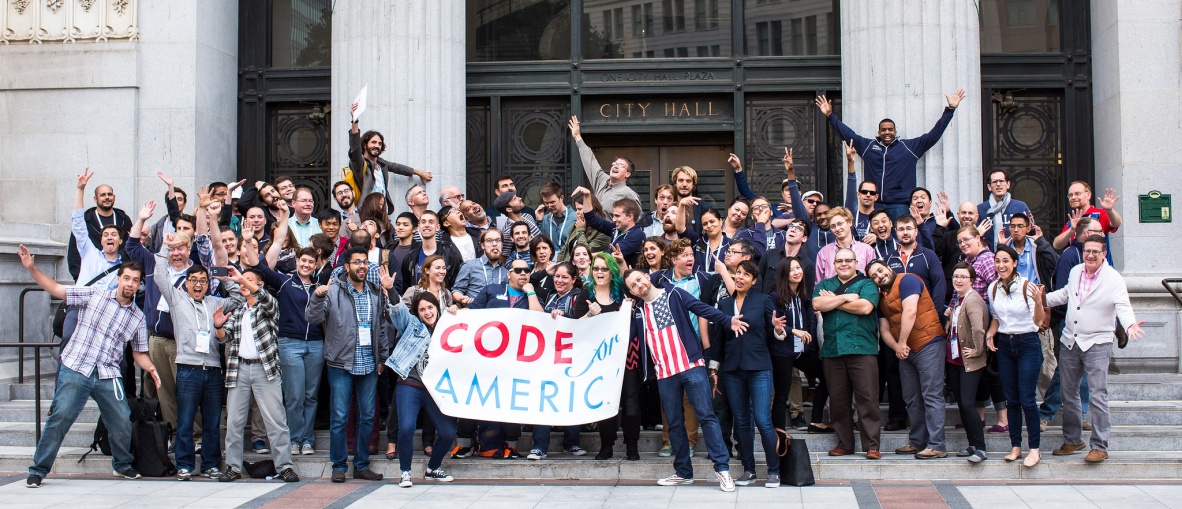
America’s civic tech army is experiencing some growing pains.
Since its launch in 2012, Code for America’s volunteer-led Brigade program has become one of the most influential civic tech bodies in the country, with chapters in 80 cities and tens of thousands of volunteer participants. A recent study by the Omidyar Network and Purpose found that the majority of grassroots civic tech activities in the U.S. over the past few years have been associated with Code for America (CfA) and that the Brigade network—which costs CfA more than a million dollars a year to run—has largely driven the geographic diversification of civic tech, from hubs in New York, San Francisco, Chicago, and Philadelphia to outposts in places like Wichita, Kansas, and Birmingham, Alabama. If you wanted evidence that civic tech is spreading, the CfA Brigade program has been Exhibit A.
But after five years, the program is getting redesigned, prompted both by longstanding frustrations within its volunteer leadership as well as the need to find a more sustainable model. Brigade’s challenges have taken on increased urgency because CfA suffered from a fundraising shortfall last year, as CfA founder and executive director Jennifer Pahlka explained in an email to Brigade organizers at the end of December. (Her email, and others to the organizer listserv, can be found in Code for America’s Brigade program Google group.) Meanwhile, in part because of the budget crunch at headquarters, brigades have been operating since the beginning of this year without the stipends from CfA that have helped support meetings and events in previous years.
Civicist: Participation in NYC Public Libraries’ Tech Trainings Soars
A new report by the Center for an Urban Future has found that participation in the technology training programs offered by New York City’s public libraries increased 81 percent in just three years. The classes on offer cover everything from basic computer literacy to coding. In some cases demand far outstrips supply; for example, one program currently serves 400 people but has a waitlist of 5,000. The report concludes that public libraries could and should play an important role in increasing digital literacy and shrinking the “tech talent gap.”
 Jessica S. McKenzie