Bulletin: Dire wolf, or Colossal misrepresentation?

Amid a supremely chaotic news environment—dominated by Trump’s deportations, Trump’s funding cuts and layoffs, Trump’s tariffs and, of course, the tumultuous stock market the tariffs produced—one carefully calibrated science story managed to break through the noise and make global headlines this week: A biotechnology company called Colossal Biosciences claims to have resurrected the dire wolf, a species that went extinct over 10,000 years ago.

Read more…

Republished by Mother Jones here.

Bulletin: Maine senator grills intelligence director Gabbard on omission of climate change from annual threat report 

Much of the Senate Intelligence Committee hearing on Tuesday was taken up by questions about the use of a private, encrypted messaging app by leaders of the US intelligence community to discuss the details of an upcoming attack on Yemen. The Signal chat included the director of national intelligence, Tulsi Gabbard, CIA Director John Ratcliffe, Vice President JD Vance, Secretary of State Marco Rubio, Defense Secretary Pete Hegseth, and the national security adviser, Michael Waltz, as well as the editor of the Atlantic, Jeffrey Goldberg, who was apparently added by mistake in what many security analysts consider an appalling and even mortifying security breach.

But while concerns about this “sloppy, careless, incompetent behavior” (per Sen. Mark Warner of Virginia) dominated the hearing, there was also a brief, telling exchange between Sen. Angus King of Maine and DNI Gabbard, in which King grilled Gabbard about the 2025 Annual Threat Assessment by the US intelligence community, which made no mention of climate change for the first time in 11 years.

Read more…

Republished by Mother Jones here.

Bulletin: (Almost) everything you wanted to know about tipping points, but were too afraid to ask

One of the most pressing questions facing climate scientists, and the world at large, is whether human-caused global warming could trigger changes in the climate system that will radically reshape the Earth as we know it. The evidence is mounting that these vast changes are not only possible, but increasingly likely as the Earth warms. But how close the world is to crossing these so-called “tipping points” is a matter of vigorous scientific debate.

The phrase “tipping point” was first coined by sociologist Morton Grodzins to describe segregation and white flight in the 1950s. It was later popularized in the early aughts by Malcolm Gladwell, who published a blockbuster popular science book called The Tipping Point, which looked at sudden social shifts through an epidemiological lens—how ideas spread like viruses. It wasn’t until 2008 that the metaphor formally entered climate science, when Tim Lenton and his colleagues published the paper “Tipping elements in the Earth’s climate system” in The Proceedings of the National Academy of Sciences.

The idea that there could be sudden and irreversible changes within the Earth’s climate system was not new. In the mid-20th century, scientists studying ice and sediment cores found evidence of abrupt warming and cooling periods in the Earth’s geologic history and inferred that abrupt climatic shifts could happen again. In past reports by the Intergovernmental Panel on Climate Change, these were called “climate surprises,” or the more cumbersome “large-scale discontinuities in the climate system.” But the tipping point metaphor caught on in a way these other phrases didn’t.

Read more…

Bulletin: ‘We’re losing our environmental history’: The future of government information under Trump

As the director of the National Security Archive’s Climate Change Transparency Project, Rachel Santarsiero is in the business of monitoring and facilitating the flow of information from the government to the public. What she’s seeing now, in the first weeks of President Trump’s second administration, is throwing the continuity of that process into doubt.

“We’re really losing our history here; we’re losing our environmental history,” Santarsiero told the Bulletin last week.

To some extent, government watchdogs, scientists, and climate and environmental activists were expecting this. During the first Trump administration, the use of terms like “climate change,” “clean energy,” and “adaptation” across federal environmental websites fell by 26 percent. In some cases, those terms were replaced by more ambiguous phrases like “energy independence” and “resilience”; other pages referencing climate change simply vanished.

But what Santarsiero and others are witnessing now goes far beyond that. Thousands of datasets have been removed from federal websites. Information on climate and the environment—from agencies like the EPA, the Council on Environmental Quality, NOAA, NASA, the State Department, and the Defense Department—has been deleted or become virtually impossible to find.

The administration’s wrecking-ball approach has raised profound questions about the integrity and future of vast amounts of information, public or not.

Read more…

Republished by Grist here.

Bulletin: Murder, mayhem, and minerals: The price of the renewable energy revolution

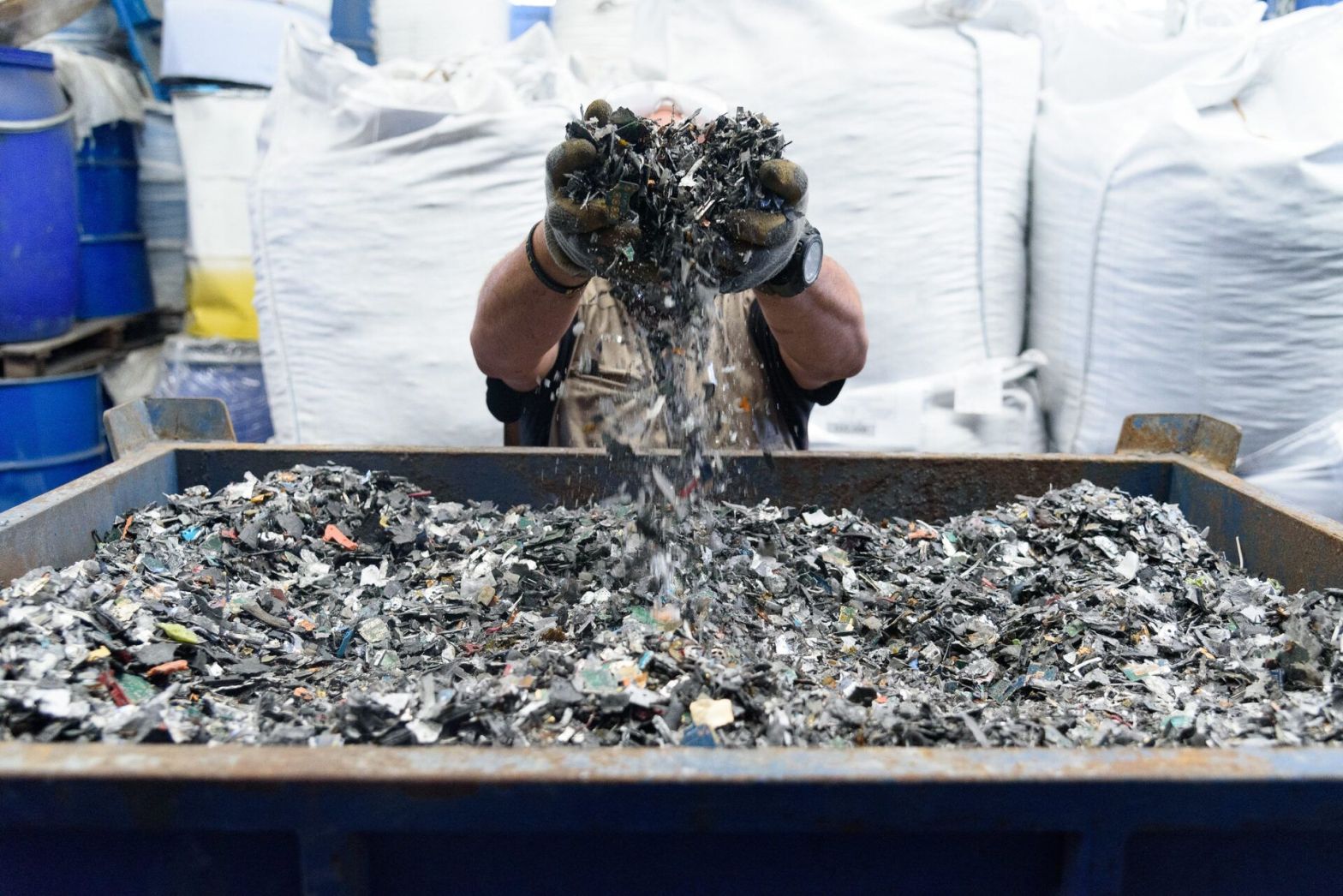
It’s not as if the human and environmental toll of mining is a particularly well-kept secret. But the full extent of the damage from mining for the rare earth elements and other metals that go into electronic devices, electric vehicles, solar panels, and countless additional components of modern life can be hard to wrap one’s mind around—unless the mountain of evidence is laid out end-to-end, as in Vince Beiser’s new book Power Metal: The Race for the Resources That Will Shape the Future. The book begins with an overview of what Beiser calls “critical metals,” where they come from, and the history of their discovery and extraction, before moving on to the current state of mining and processing critical metals today.

Demand for these substances has soared in the Information Age and is projected to keep climbing. (One factoid that stood out: “Just one Tesla Model S can contain as much lithium as ten thousand mobile phones.”) The environmental damage caused by the production of critical metals is continuing to mount—and could grow in unexpected ways if, for example, companies begin mining the sea floor.

Still, humans need these substances, especially for the renewable energy technologies needed to stem climate change. There is no Cinderella-shoe solution. There are always trade-offs. As Beiser writes, “When it comes to mining, the choice is never between bad and good but only bad and less bad.”

Beiser’s question is, in the end, how can the world mine better? How can the damage—to people, to places—be minimized? He also examines the various ways to limit mining by increasing recycling (itself a dirty and dangerous business that could stand to be improved) and reducing demand for metals in the first place.

Read more…