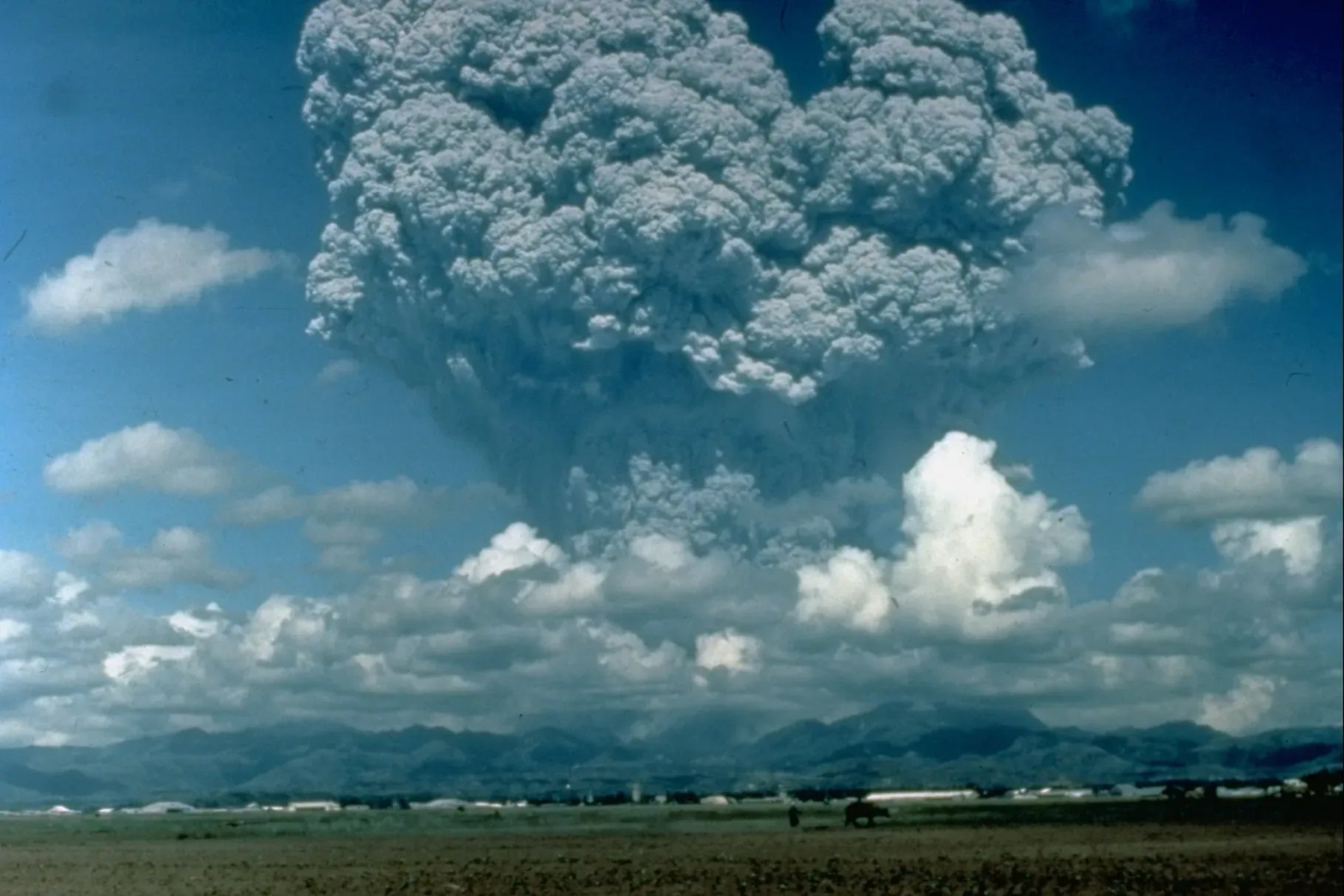
Bulletin: Americans elect a climate change denier (again)

It was Election Day in America. Four people, including two poll workers, died in flash floods in Missouri. The National Weather Service recorded 3.75 inches of rainfall in St. Louis the day before, nearly three times as much as the previous daily record for November 4. “We can’t necessarily attribute one instance, one event, to the effects of climate change, but we are having these extreme rainfall events happening more frequently, and they will continue to increase in frequency,” National Weather Service meteorologist Melissa Delia told the local public radio station.

It was Election Day in America. Residents of the 25 North Carolina counties most impacted by Hurricane Helene, which was made rainier, more powerful, and more likely because of climate change, voted in higher numbers than the rest of the state after the elections board expanded voting options for those areas. Voters in Florida also adjusted to storm-related upheaval after the one-two punch of hurricanes Helene and Milton. Dozens of precincts across the state had to move polling places as a result of hurricane damage, and Gov. Ron DeSantis changed voting procedures to allow greater flexibility for worst-hit areas. Like Helene, Hurricane Milton was both more intense and rainier because of climate change. The two storms combined killed more than 260 people across Florida and the southeastern United States.

Read more…

Bulletin: ‘We’re not going fast enough’: Sherri Goodman on climate change as security threat

In September 1987, when Sherri Goodman joined the US Senate Committee on Armed Services, she was its youngest professional staff member and the only woman. Goodman would go on to help forge the nascent fields of environmental and climate security. In her new book, Threat Multiplier: Climate, Military Leadership, and the Fight for Global Security, she tells the inside story of what she calls the “military’s environmental awakening.”

One of Goodman’s first responsibilities was overseeing the nation’s nuclear weapons plants at a particularly fraught moment. Within a year of joining the Armed Services Committee, the New York Times was running front-page stories about safety lapses at nuclear weapons plants on an almost weekly basis. Goodman’s work was thrust into the Congressional hot seat. She was tasked with drafting legislation for a new oversight mechanism, which eventually became (after a legislative wrestling match with the Governmental Affairs Committee) the Defense Nuclear Facilities Safety Board.

In 1993, Goodman was appointed the first-ever deputy undersecretary of defense (environmental security). She oversaw the Defense Department’s environmental programs, including the projects to clean up pollution at the roughly 100 military bases on the list of toxic Superfund sites. Many of the stories from this period of her career are about fighting tooth and nail for barely adequate funding from defense officials who would rather spend dollars on more equipment or weapons than on cleaning up their messes—even if those messes posed environmental health threats to American citizens. “There always seemed to be a faction who saw environmental stewardship and military readiness as opposing forces, instead of two sides of the same coin,” Goodman writes.

While at the Pentagon, she had a front-row seat to the political fight over whether the United States would sign on to the Kyoto Protocol, the first international treaty to set legally binding targets for greenhouse gas emissions. Climate change had become a fraught, polarizing issue in American politics. (President Bill Clinton signed the treaty but Congress never ratified it, and President George W. Bush later withdrew that signature.)

Goodman led the development of the Defense Department’s first climate change strategy, focusing on achieving emissions reductions without compromising military might and readiness. When she left the Pentagon in January 2001, her team fêted her with gag gifts like a plaque that said, “Mother of Environmental Security” (she was eight-and-a-half months pregnant at the time).

Goodman’s work in that arena was far from over. While working at the Center for Naval Analyses, she convened the CNA Military Advisory Board, a group of former senior (three- and four- star) military leaders, to study the security implications of climate change. It was in a meeting of this group that Goodman suggested “threat multiplier” as a way of describing how climate interacts with security concerns, and the phrase was included in the 2007 report, “National Security and the Threat of Climate Change.”

In the following interview, Sherri Goodman discusses that legacy, the military’s mixed record on climate and environmental issues, the need for strong and enforceable environmental regulations, and the extent to which the United States is prepared for climate disasters.

Read more…

Bulletin: Science historian Naomi Oreskes schools the Supreme Court on climate change

In a 2007 decision, former Supreme Court Justice John Paul Stevens contended that when Congress passed the Clean Air Act of 1970, “the study of climate change was in its infancy” and it wasn’t until later that decade that the federal government “began devoting serious attention to the possibility that carbon dioxide emissions associated with human activity could provoke climate change.” Even so, the Court found in Massachusetts v. EPA that the Clean Air Act authorized the Environmental Protection Agency to regulate carbon dioxide and other greenhouse gases as air pollutants, because the act was “capacious” in its definition of air pollutants.

A 2022 decision by a starkly different Supreme Court all but reversed the Massachusetts decision, greatly curtailing the EPA’s ability to limit power plant emissions of carbon dioxide. The basis of the decision in that case, West Virginia v. EPA, involved a new and hotly contested legal theory: the so-called “major questions doctrine” that the current, conservative-dominated Court has adopted. Under that doctrine, Chief Justice John Roberts wrote, there must have been “clear congressional authorization” for executive branch agencies such as the EPA to take actions with “vast economic and political significance.” The decision holds that there was no such authorization, greatly limiting the EPA’s efforts to regulate carbon emissions from power plants.

Considered together, the Massachusetts and West Virginia cases raise an important question: Did Congress understand that regulating air pollutants like carbon dioxide would have vast economic and political impacts when it passed the Clean Air Act more than 50 years ago?

The answer to that question, according to a forthcoming paper in the Ecology Law Review, is clearly “yes.”

What began as a modest inquiry by science historian Naomi Oreskes into what scientists and elected officials knew about carbon dioxide in 1970 ballooned into a years-long investigation that underlies the law review paper, made available to the Bulletin ahead of its expected publication later this month. That investigation, which Oreskes conducted along with other researchers from Harvard and Duke universities, shows that experts long ago recognized the climate-altering impacts of greenhouse gases like carbon dioxide, and that they also knew that regulation of these emissions could have wide-ranging economic impacts. These facts were shared and discussed among White House staffers and high-ranking elected and administrative officials, including the primary architects of the Clean Air Act.

Such conversations were not limited to the halls of power. The paper also reveals the extent to which discussions about carbon dioxide and global warming penetrated popular culture early on. Among those pop culture efforts was a 1958 educational film by Frank Capra (whose better-known movies include Mr. Smith Goes to Washington and It’s a Wonderful Life) called The Unchained Goddess, in which the character Dr. Research explains that the carbon dioxide emitted from factories and automobiles was already warming the atmosphere, and if the polar ice caps melted, one day tourists “in glass bottom boats would be viewing the drowned towers of Miami through 150 feet of tropical water.” The greenhouse effect from carbon dioxide emissions was also covered in My Weekly Reader and other school materials for children.

In February 1969, the beat poet Allen Ginsberg appeared on The Merv Griffin Show, discussing how the proliferation of automobiles and “their excrement” was warming the Earth. The show prompted a concerned citizen to write to US Sen. Henry “Scoop” Jackson of Washington, asking him to contradict this dangerous misinformation. Jackson passed the letter on to presidential science advisor Lee DuBridge, who replied at length, confirming that the greenhouse effect was real and was the result of gases from burning fossil fuels. “We are, in a word, performing a gigantic experiment on ourselves,” DuBridge wrote. “It seems to me of great importance that we know the meaning of this experiment and its possible outcomes before discovering them too late and perhaps to our sorrow.”

Shortly thereafter, DuBridge floated the idea of a “polluter’s tax” on Meet the Press. “I don’t like to be a calamity howler, but sometimes it takes a few calamity howlers to wake people up to the fact that there are serious problems and to arouse people to the point where they are willing to do something about it,” he told television viewers. “I think we are at that point now.” That point was 1969.

In the following interview, Oreskes and I discuss the origins of her investigation and how its conclusions about the history of climate science could impact future environmental court cases.

Read more…
Bulletin: Is the University of Chicago’s new climate initiative a brave research program or potentially dangerous foray into solar geoengineering?

In 2006, a group of preeminent scientists met for a two-day conference at the NASA Ames Research Center in California to discuss cooling the Earth by injecting particles into the stratosphere to reflect sunlight into space.

At some point, one of the conference rooms became overheated.

“The room was getting kind of hot, and somebody went over to the thermostat to try and fix it,” recalled Alan Robock, a Rutgers climatologist who was in attendance. “And they couldn’t adjust it. And so many people didn’t understand the irony that you can’t control the temperature of a room, but you’re talking about controlling the temperature of the whole Earth.”

Solar geoengineering—also called solar radiation management or solar radiation modification—was then and is now a fraught subject. Many experts and nonexperts alike consider the idea of deliberately mucking about with Earth’s climate systems to counteract centuries of mostly accidental mucking about in Earth’s climate systems ethically dubious and potentially highly dangerous.

And yet: Last year, the global average temperature was almost 1.5 degrees Celsius warmer than the pre-industrial average, due to the vast amounts of heat-trapping carbon dioxide that humans have added to the atmosphere by burning fossil fuels. This warming is responsible for a wide range of climate impacts, from more extreme storms and longer heat waves to increased precipitation and flooding as well as more severe droughts and longer wildfire seasons.

As the climate crisis has escalated, some experts have suggested that drastic measures like solar geoengineering may eventually become necessary and so should be researched now.

Read more…