Bulletin: (Almost) everything you wanted to know about tipping points, but were too afraid to ask

One of the most pressing questions facing climate scientists, and the world at large, is whether human-caused global warming could trigger changes in the climate system that will radically reshape the Earth as we know it. The evidence is mounting that these vast changes are not only possible, but increasingly likely as the Earth warms. But how close the world is to crossing these so-called “tipping points” is a matter of vigorous scientific debate.

The phrase “tipping point” was first coined by sociologist Morton Grodzins to describe segregation and white flight in the 1950s. It was later popularized in the early aughts by Malcolm Gladwell, who published a blockbuster popular science book called The Tipping Point, which looked at sudden social shifts through an epidemiological lens—how ideas spread like viruses. It wasn’t until 2008 that the metaphor formally entered climate science, when Tim Lenton and his colleagues published the paper “Tipping elements in the Earth’s climate system” in The Proceedings of the National Academy of Sciences.

The idea that there could be sudden and irreversible changes within the Earth’s climate system was not new. In the mid-20th century, scientists studying ice and sediment cores found evidence of abrupt warming and cooling periods in the Earth’s geologic history and inferred that abrupt climatic shifts could happen again. In past reports by the Intergovernmental Panel on Climate Change, these were called “climate surprises,” or the more cumbersome “large-scale discontinuities in the climate system.” But the tipping point metaphor caught on in a way these other phrases didn’t.

Read more…

Bulletin: ‘We’re losing our environmental history’: The future of government information under Trump

As the director of the National Security Archive’s Climate Change Transparency Project, Rachel Santarsiero is in the business of monitoring and facilitating the flow of information from the government to the public. What she’s seeing now, in the first weeks of President Trump’s second administration, is throwing the continuity of that process into doubt.

“We’re really losing our history here; we’re losing our environmental history,” Santarsiero told the Bulletin last week.

To some extent, government watchdogs, scientists, and climate and environmental activists were expecting this. During the first Trump administration, the use of terms like “climate change,” “clean energy,” and “adaptation” across federal environmental websites fell by 26 percent. In some cases, those terms were replaced by more ambiguous phrases like “energy independence” and “resilience”; other pages referencing climate change simply vanished.

But what Santarsiero and others are witnessing now goes far beyond that. Thousands of datasets have been removed from federal websites. Information on climate and the environment—from agencies like the EPA, the Council on Environmental Quality, NOAA, NASA, the State Department, and the Defense Department—has been deleted or become virtually impossible to find.

The administration’s wrecking-ball approach has raised profound questions about the integrity and future of vast amounts of information, public or not.

Read more…

Republished by Grist here.

Bulletin: Texas wildfires force major nuclear weapons facility to briefly pause operations

With François Diaz-Maurin.

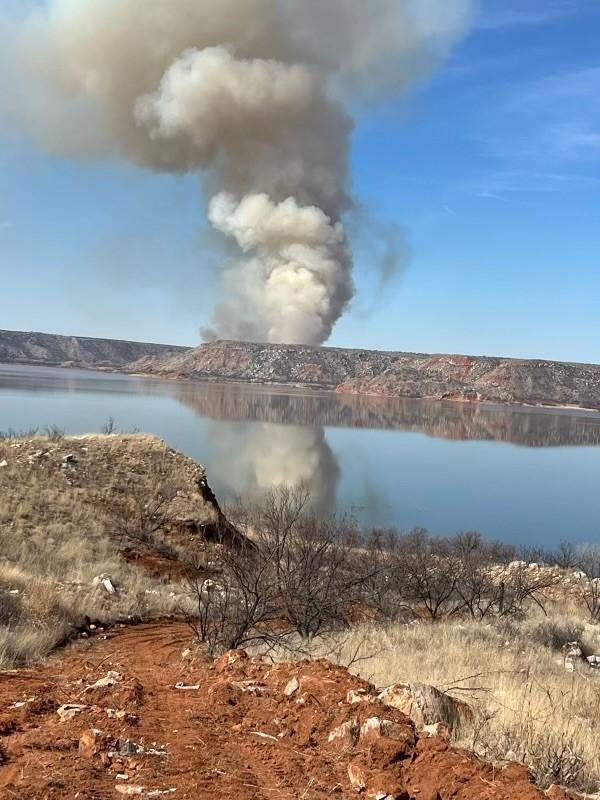
A wildland fire in the Texas Panhandle forced the Pantex plant, a nuclear facility northeast of Amarillo, to temporarily cease operations on Tuesday and to evacuate nonessential workers. Plant workers also started construction on a fire barrier to protect the plant’s facilities.

The plant resumed normal operations on Wednesday, officials said.

“Thanks to the responsive actions of all Pantexans and the NNSA Production Office in cooperation with the women and men of the Pantex Fire Department and our mutual aid partners from neighboring communities, the fire did not reach or breach the plant’s boundary,” Pantex said in a social media post on Wednesday afternoon.

At a press conference Tuesday evening, Laef Pendergraft, a nuclear safety engineer with the National Nuclear Security Administration production office at Pantex, said the evacuations were out of an “abundance of caution.”

“Currently we are responding to the plant, but there is no fire on our site or on our boundary,” Pendergraft told reporters.

The 90,000-acre Windy Deuce fire burning four to five miles to the north of the Pantex plant was 25 percent contained as of late Wednesday afternoon.

Until the fire is fully contained, it will continue to pose a threat to the nearby Pantex plant, says Nickolas Roth, the senior director of nuclear materials security at the Nuclear Threat Initiative. “I think the sign that the coast is clear is that the fire is no longer burning,” he told the Bulletin. “One can imagine many reasons operations would resume.”

Read more…

Bulletin: ‘Mass delusion and wishful thinking’: Why everything you think you know about methane is probably wrong

Have you heard about the miracle quick-fix for our climate ills?

The greenhouse gas methane is responsible for roughly 30 percent of the increase in global temperature since the industrial revolution and is often described as 80 times more potent than carbon dioxide. Sometimes news outlets remember to qualify that with “over 20 years,” and sometimes they don’t.

In a press call during the 28th Conference of Parties, the annual United Nations climate conference, US Sen. Sheldon Whitehouse of Rhode Island said methane was his “number one” priority at the conference. Shortly after, the Biden administration announced a new EPA rule targeting methane emissions. The press release announcing the rule stated, “Sharp cuts in methane emissions are among the most critical actions the United States can take in the short term to slow the rate of climate change.”

“[T]he U.S. is turbocharging the speed and scale of climate action, at home and abroad, including our collective efforts to tackle super-pollutants like methane,” said US National Climate Advisor Ali Zaidi.

The popular narrative suggests that tackling methane emissions is the “low-hanging fruit” in the climate-solutions toolbox. The belief that turning off the taps on this “super-pollutant” could “buy us time” to address the climate crisis is widespread, shared by politicians, journalists, and even some scientists.

But this is a dangerous fallacy, according to Raymond Pierrehumbert, a professor of physics at the University of Oxford and a member of the Bulletin of the Atomic Scientists Science and Security Board.

In an in-depth interview with Bulletin climate editor Jessica McKenzie, Pierrehumbert dissects the Oil and Gas Decarbonization Charter—the voluntary pledge made at COP28 by some oil and gas companies to slash operational emissions of greenhouse gases, including bringing methane emissions to “near-zero.” He goes on to explain why describing methane as “80 times as potent as carbon dioxide” is inaccurate and misleading and why the widespread hope that sharp cuts to methane emissions will bring about immediate and significant reductions of global temperatures is both wrong and distressing.

Read more…