Bulletin: Murder, mayhem, and minerals: The price of the renewable energy revolution

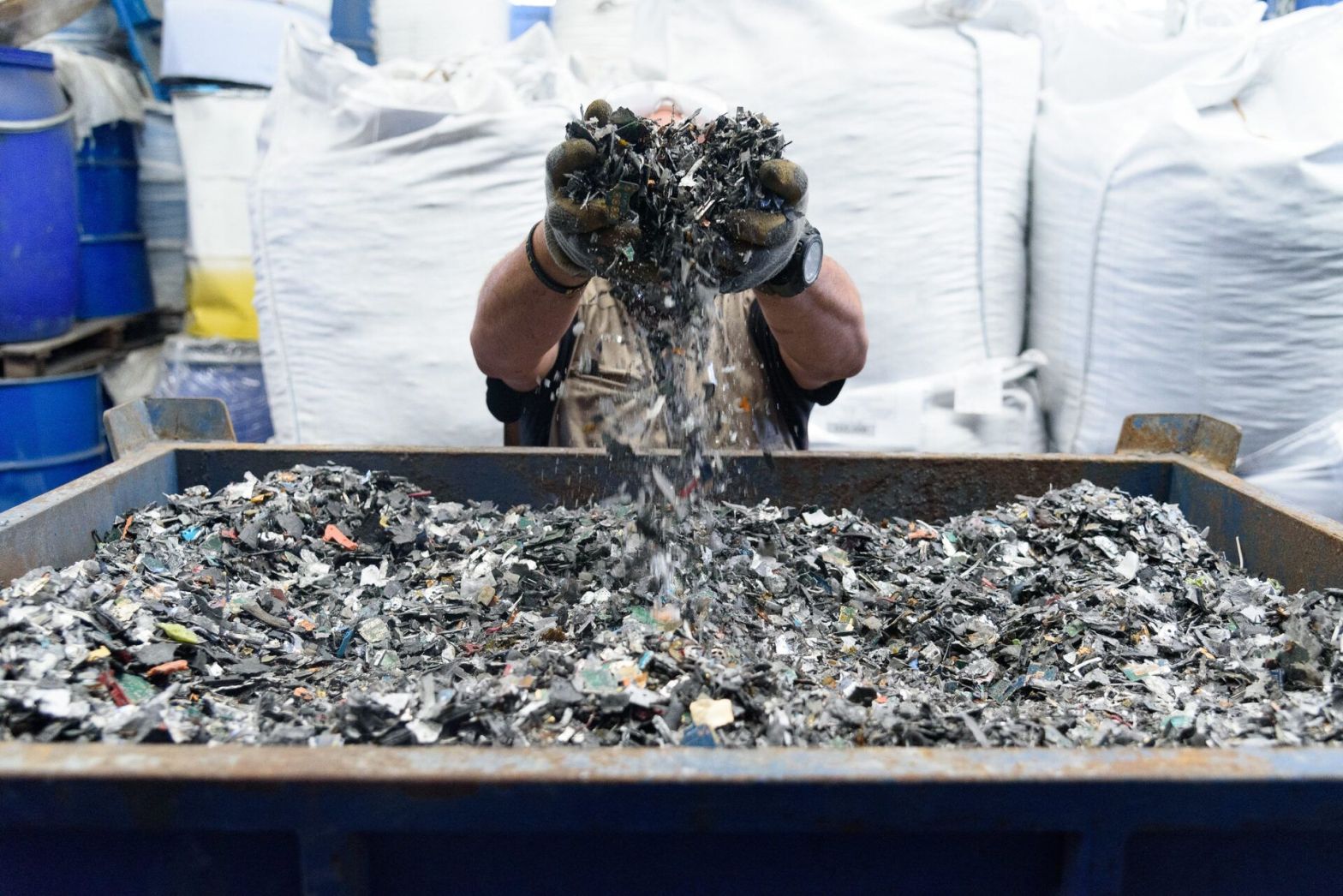
It’s not as if the human and environmental toll of mining is a particularly well-kept secret. But the full extent of the damage from mining for the rare earth elements and other metals that go into electronic devices, electric vehicles, solar panels, and countless additional components of modern life can be hard to wrap one’s mind around—unless the mountain of evidence is laid out end-to-end, as in Vince Beiser’s new book Power Metal: The Race for the Resources That Will Shape the Future. The book begins with an overview of what Beiser calls “critical metals,” where they come from, and the history of their discovery and extraction, before moving on to the current state of mining and processing critical metals today.

Demand for these substances has soared in the Information Age and is projected to keep climbing. (One factoid that stood out: “Just one Tesla Model S can contain as much lithium as ten thousand mobile phones.”) The environmental damage caused by the production of critical metals is continuing to mount—and could grow in unexpected ways if, for example, companies begin mining the sea floor.

Still, humans need these substances, especially for the renewable energy technologies needed to stem climate change. There is no Cinderella-shoe solution. There are always trade-offs. As Beiser writes, “When it comes to mining, the choice is never between bad and good but only bad and less bad.”

Beiser’s question is, in the end, how can the world mine better? How can the damage—to people, to places—be minimized? He also examines the various ways to limit mining by increasing recycling (itself a dirty and dangerous business that could stand to be improved) and reducing demand for metals in the first place.

Read more…

Bulletin: Meteorologist John Morales: There’s rapid intensification, there’s extreme rapid intensification—and then there’s Hurricane Milton

Fresh on the heels of Hurricane Helene, Hurricane Milton is barreling towards the Florida peninsula and is likely to make landfall near Tampa Bay metropolitan area, home to more than 3.1 million people, sometime late Wednesday or early Thursday. Tampa Mayor Jane Castor issued a stark warning to the city’s residents: “There’s never been one like this. Helene was a wake-up call. This is literally catastrophic. I can say without any dramatization whatsoever, if you choose to stay in one of those evacuation areas, you’re going to die.”

When Miami-based meteorologist John Morales wrote in the Bulletin last week that Hurricane Helene was a “harbinger” of the future, who knew that the future would come so soon?

I caught up with Morales in between his frequent on-air appearances on NBC6 to discuss what makes Hurricane Milton so remarkable, and so remarkably dangerous—particularly if it hits Tampa Bay head on. We also discussed what was going through his mind during an emotional moment on air, when he realized that Hurricane Milton had become a Category 5 storm in less than a day.

Read more…

Bulletin: ‘We’re not going fast enough’: Sherri Goodman on climate change as security threat

In September 1987, when Sherri Goodman joined the US Senate Committee on Armed Services, she was its youngest professional staff member and the only woman. Goodman would go on to help forge the nascent fields of environmental and climate security. In her new book, Threat Multiplier: Climate, Military Leadership, and the Fight for Global Security, she tells the inside story of what she calls the “military’s environmental awakening.”

One of Goodman’s first responsibilities was overseeing the nation’s nuclear weapons plants at a particularly fraught moment. Within a year of joining the Armed Services Committee, the New York Times was running front-page stories about safety lapses at nuclear weapons plants on an almost weekly basis. Goodman’s work was thrust into the Congressional hot seat. She was tasked with drafting legislation for a new oversight mechanism, which eventually became (after a legislative wrestling match with the Governmental Affairs Committee) the Defense Nuclear Facilities Safety Board.

In 1993, Goodman was appointed the first-ever deputy undersecretary of defense (environmental security). She oversaw the Defense Department’s environmental programs, including the projects to clean up pollution at the roughly 100 military bases on the list of toxic Superfund sites. Many of the stories from this period of her career are about fighting tooth and nail for barely adequate funding from defense officials who would rather spend dollars on more equipment or weapons than on cleaning up their messes—even if those messes posed environmental health threats to American citizens. “There always seemed to be a faction who saw environmental stewardship and military readiness as opposing forces, instead of two sides of the same coin,” Goodman writes.

While at the Pentagon, she had a front-row seat to the political fight over whether the United States would sign on to the Kyoto Protocol, the first international treaty to set legally binding targets for greenhouse gas emissions. Climate change had become a fraught, polarizing issue in American politics. (President Bill Clinton signed the treaty but Congress never ratified it, and President George W. Bush later withdrew that signature.)

Goodman led the development of the Defense Department’s first climate change strategy, focusing on achieving emissions reductions without compromising military might and readiness. When she left the Pentagon in January 2001, her team fêted her with gag gifts like a plaque that said, “Mother of Environmental Security” (she was eight-and-a-half months pregnant at the time).

Goodman’s work in that arena was far from over. While working at the Center for Naval Analyses, she convened the CNA Military Advisory Board, a group of former senior (three- and four- star) military leaders, to study the security implications of climate change. It was in a meeting of this group that Goodman suggested “threat multiplier” as a way of describing how climate interacts with security concerns, and the phrase was included in the 2007 report, “National Security and the Threat of Climate Change.”

In the following interview, Sherri Goodman discusses that legacy, the military’s mixed record on climate and environmental issues, the need for strong and enforceable environmental regulations, and the extent to which the United States is prepared for climate disasters.

Read more…

Bulletin: ‘Mass delusion and wishful thinking’: Why everything you think you know about methane is probably wrong

Have you heard about the miracle quick-fix for our climate ills?

The greenhouse gas methane is responsible for roughly 30 percent of the increase in global temperature since the industrial revolution and is often described as 80 times more potent than carbon dioxide. Sometimes news outlets remember to qualify that with “over 20 years,” and sometimes they don’t.

In a press call during the 28th Conference of Parties, the annual United Nations climate conference, US Sen. Sheldon Whitehouse of Rhode Island said methane was his “number one” priority at the conference. Shortly after, the Biden administration announced a new EPA rule targeting methane emissions. The press release announcing the rule stated, “Sharp cuts in methane emissions are among the most critical actions the United States can take in the short term to slow the rate of climate change.”

“[T]he U.S. is turbocharging the speed and scale of climate action, at home and abroad, including our collective efforts to tackle super-pollutants like methane,” said US National Climate Advisor Ali Zaidi.

The popular narrative suggests that tackling methane emissions is the “low-hanging fruit” in the climate-solutions toolbox. The belief that turning off the taps on this “super-pollutant” could “buy us time” to address the climate crisis is widespread, shared by politicians, journalists, and even some scientists.

But this is a dangerous fallacy, according to Raymond Pierrehumbert, a professor of physics at the University of Oxford and a member of the Bulletin of the Atomic Scientists Science and Security Board.

In an in-depth interview with Bulletin climate editor Jessica McKenzie, Pierrehumbert dissects the Oil and Gas Decarbonization Charter—the voluntary pledge made at COP28 by some oil and gas companies to slash operational emissions of greenhouse gases, including bringing methane emissions to “near-zero.” He goes on to explain why describing methane as “80 times as potent as carbon dioxide” is inaccurate and misleading and why the widespread hope that sharp cuts to methane emissions will bring about immediate and significant reductions of global temperatures is both wrong and distressing.

Read more…

Bulletin: From Montana fires to floods in Vermont: Interview with a climate migrant

This week Vermont (as well as parts of New York and Massachusetts) saw heavy rainfall resulting in catastrophic flooding in the state capital and other low-lying towns across the state. One man drowned in his home; hundreds of others were rescued or evacuated. The full extent of the damage to infrastructure and personal property will not be known for some time, and more rain is forecast for this weekend.

State climate assessments have already found that, because of climate change, Vermont is getting wetter: Precipitation is up 21 percent since the beginning of the 20th century, and the state sees almost two and a half more days of heavy precipitation annually than in the 1960s. Consequently, the state is at an increased risk for damaging rainfall and flooding. And yet Vermont has for several years now been positioning itself as a refuge for people looking to escape the worst ravages of the climate crisis.

“Climate change could be, in some ways, beneficial to Vermont,” Republican Gov. Phil Scott said in 2017. “When we’re seeing some of the activity in California today with wildfires and the lack of water in some regions of the country, if we protect our resources, we could use this as an economic boom in some respects.”

While events this week have underscored the reality that there is no escaping the climate crisis, it is true that people have moved to Vermont because the state is perceived to be safer than other places. Zack Porter, the co-founder of a regional environmental nonprofit called Standing Trees, chose to move with his family from Montana to Montpelier, Vermont, in 2018 to get away from the long wildfire seasons out West. The Bulletin reached out to Porter to ask him about experience as a voluntary climate migrant, and about his hopes and dreams for how Vermont will recover and rebuild from this disaster.

Read more…