‘Wholesale destruction’: Government shutdown or not, critical science programs are at risk

The United States is hurtling towards a potential government shutdown if Congress does not pass a budget or short-term funding bill by the end of the month, and the fate of the federal government’s Earth and climate science programs may hang in the balance.

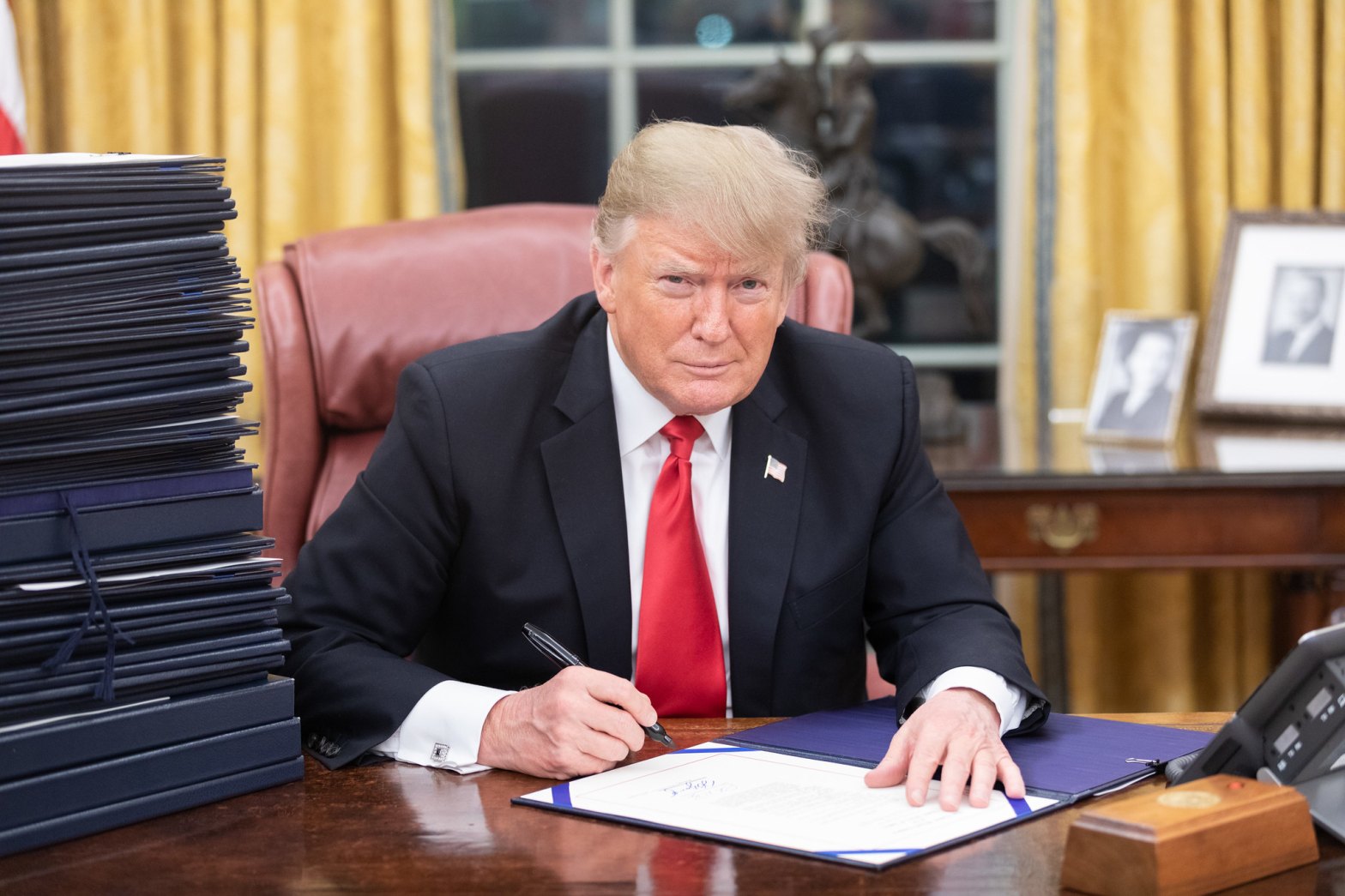
President Donald Trump has proposed vast, devastating cuts to these agencies, many of which target programs dedicated to studying and preparing for climate change. In the event of a shutdown, the Office of Management and Budget, or OMB, has told agencies to consider layoffs or reductions in force for “all employees” in all “programs, projects, or activities” with lapsed funding that are “not consistent with the President’s priorities.”

As Sophia Cai notes in Politico, this is starkly different from how previous government shutdowns were handled, when federal workers were temporarily furloughed and returned to work when funding was restored. Senate Minority Leader Chuck Schumer characterized the memo as an “attempt at intimidation.”

Bobby Kogan, a former OMB official with the Biden administration, said the direction may not be legal. “It doesn’t seem to me that they would really be able to legally do that additional work during a shutdown—and it doesn’t seem to me that they’d be able to get it all done beforehand,” Kogan told the Federal News Network. “So either this is something they were planning to do anyway, and they are just using this as a pretext, or it’s a threat to try to get what they want.”

Organizations that represent the interests of public workers have been more explicit: “The plan to exploit a shutdown to purge federal workers is illegal, unconstitutional, and deeply disturbing,” Tim Whitehouse, the executive director of Public Employees for Environmental Responsibility, said in a statement. “A shutdown triggers furloughs, not firings. To weaponize it as a tool to destroy the civil service would mark a dangerous slide into lawlessness and further consolidate power in the Executive Branch.”

But illegality (or possible illegality) would not necessarily stop the Trump administration from choosing the layoff route if a budget deal is not reached. In any case, the memo obviously creates uncertainty and anxiety for the federal scientists whose work has been singled out for steep funding cuts or even elimination by the Trump administration.

“Either we all go home or it’s business as usual … nobody knows what’s going to happen,” one NASA scientist, who spoke on the condition of anonymity, told the Bulletin.

Read more…

Republished by Mother Jones here.

Decommissioned, retired, paused: The weather, climate, and Earth science data the government doesn’t want you to see

In the early 1990s, a University of Michigan graduate student named Jeff Masters started working on an internet weather project to share real-time weather information and satellite imagery, something most people take for granted today but was at the time revolutionary. That project was Weather Underground, which claims the honorific of being the “Internet’s 1st weather service.” It had a mission to “make quality weather information available to every person on this planet,” and promised to “provide weather data for those that are underserved by other weather providers.” Although it started as a service for universities and K-12 educators, Weather Underground became a commercial product in 1995, and for a time had more daily page views than the Weather Channel, which acquired the site in 2012.

More than three decades have passed since Weather Underground’s humble beginnings, and Masters left the company in 2019, but he can still rattle off the tools and software that he used to build the site. These include WXP, McIDAS, and LDM, all of which were provided by Unidata, a program started in the 1980s to share meteorological and atmospheric data between universities and to improve access for researchers and educators. To a layperson, these acronyms likely mean very little, but their general purpose is neatly conveyed in the name “Unidata”: a one-stop shop of universal tools for the distribution and management of data, specifically Earth and atmospheric data.

“Our little weather project was completely impossible without Unidata,” Masters told the Bulletin.

On May 12, the Unidata program paused most of its operations due to a lapse in funding from the National Science Foundation. Although it has a five-year grant from the foundation, it receives that funding in one-year increments and was due up for a new infusion shortly after the National Science Foundation instituted a funding freeze at the end of April. Now, almost the entire staff is furloughed, and the program is in limbo. It is unclear how long the funding freeze will be in effect or when the program will be able to resume operations, although a blog post on the website states, “We hope to get back to normal operations and be working with you again soon.”

Read more…

Can US courts save the Earth?

Since President Trump was inaugurated in January, he has unleashed a barrage of attacks on federal institutions, employees, laws, and regulations. Agencies that deal with climate, energy, and environmental policy have been on the receiving end of many of these attacks, more than a few of which are of dubious legality and go far beyond anything Trump attempted in his first term.

With Democratic minorities in the House and Senate, and virtually no resistance from Republicans in Congress, Trump’s agenda has rolled out with only the judicial branch as a “last bulwark” against it. Some have countered that the bulwark is leaky or partly collapsed, and “courts alone can’t save us.” Even so, lawsuits against various parts and officials of the Trump administration continue to pile up. The question is whether the administration will prompt a constitutional crisis by ignoring or defying judicial decisions it dislikes. Whether the United States is already in a constitutional crisis, or merely rapidly approaching one, is a matter of vigorous debate.

Michael Burger, the executive director of the Sabin Center for Climate Change Law at Columbia University, said this debate hinges on whether the Trump administration must defy the Supreme Court to launch a full-blown constitutional crisis, or if defying a lower court is enough.

But in Burger’s opinion? “We’re already there,” he said. “The only question is, how far is it going to go?”

Read more…

Bulletin: Maine senator grills intelligence director Gabbard on omission of climate change from annual threat report 

Much of the Senate Intelligence Committee hearing on Tuesday was taken up by questions about the use of a private, encrypted messaging app by leaders of the US intelligence community to discuss the details of an upcoming attack on Yemen. The Signal chat included the director of national intelligence, Tulsi Gabbard, CIA Director John Ratcliffe, Vice President JD Vance, Secretary of State Marco Rubio, Defense Secretary Pete Hegseth, and the national security adviser, Michael Waltz, as well as the editor of the Atlantic, Jeffrey Goldberg, who was apparently added by mistake in what many security analysts consider an appalling and even mortifying security breach.

But while concerns about this “sloppy, careless, incompetent behavior” (per Sen. Mark Warner of Virginia) dominated the hearing, there was also a brief, telling exchange between Sen. Angus King of Maine and DNI Gabbard, in which King grilled Gabbard about the 2025 Annual Threat Assessment by the US intelligence community, which made no mention of climate change for the first time in 11 years.

Read more…

Republished by Mother Jones here.

Bulletin: Americans elect a climate change denier (again)

It was Election Day in America. Four people, including two poll workers, died in flash floods in Missouri. The National Weather Service recorded 3.75 inches of rainfall in St. Louis the day before, nearly three times as much as the previous daily record for November 4. “We can’t necessarily attribute one instance, one event, to the effects of climate change, but we are having these extreme rainfall events happening more frequently, and they will continue to increase in frequency,” National Weather Service meteorologist Melissa Delia told the local public radio station.

It was Election Day in America. Residents of the 25 North Carolina counties most impacted by Hurricane Helene, which was made rainier, more powerful, and more likely because of climate change, voted in higher numbers than the rest of the state after the elections board expanded voting options for those areas. Voters in Florida also adjusted to storm-related upheaval after the one-two punch of hurricanes Helene and Milton. Dozens of precincts across the state had to move polling places as a result of hurricane damage, and Gov. Ron DeSantis changed voting procedures to allow greater flexibility for worst-hit areas. Like Helene, Hurricane Milton was both more intense and rainier because of climate change. The two storms combined killed more than 260 people across Florida and the southeastern United States.

Read more…