Bulletin: ‘Mass delusion and wishful thinking’: Why everything you think you know about methane is probably wrong

Have you heard about the miracle quick-fix for our climate ills?

The greenhouse gas methane is responsible for roughly 30 percent of the increase in global temperature since the industrial revolution and is often described as 80 times more potent than carbon dioxide. Sometimes news outlets remember to qualify that with “over 20 years,” and sometimes they don’t.

In a press call during the 28th Conference of Parties, the annual United Nations climate conference, US Sen. Sheldon Whitehouse of Rhode Island said methane was his “number one” priority at the conference. Shortly after, the Biden administration announced a new EPA rule targeting methane emissions. The press release announcing the rule stated, “Sharp cuts in methane emissions are among the most critical actions the United States can take in the short term to slow the rate of climate change.”

“[T]he U.S. is turbocharging the speed and scale of climate action, at home and abroad, including our collective efforts to tackle super-pollutants like methane,” said US National Climate Advisor Ali Zaidi.

The popular narrative suggests that tackling methane emissions is the “low-hanging fruit” in the climate-solutions toolbox. The belief that turning off the taps on this “super-pollutant” could “buy us time” to address the climate crisis is widespread, shared by politicians, journalists, and even some scientists.

But this is a dangerous fallacy, according to Raymond Pierrehumbert, a professor of physics at the University of Oxford and a member of the Bulletin of the Atomic Scientists Science and Security Board.

In an in-depth interview with Bulletin climate editor Jessica McKenzie, Pierrehumbert dissects the Oil and Gas Decarbonization Charter—the voluntary pledge made at COP28 by some oil and gas companies to slash operational emissions of greenhouse gases, including bringing methane emissions to “near-zero.” He goes on to explain why describing methane as “80 times as potent as carbon dioxide” is inaccurate and misleading and why the widespread hope that sharp cuts to methane emissions will bring about immediate and significant reductions of global temperatures is both wrong and distressing.

Read more…

Bulletin: Wonder in the time of climate crisis

I was prepared to loathe the new nature docuseries from PBS, “Evolution Earth.”

The press release crowed that the series “reveal[s] animals keeping pace with a planet changing at superspeed” and “tells a tale of resilience that redefines our understanding of evolution and hints at how nature can show a path towards a sustainable future for Planet Earth.”

This copy flew in the face of at least one article that recently passed through my inbox, which reported that even African wild dogs, a species adapted to the warm tropics, were suffering from hotter temperatures. Researchers found fewer pups were surviving to adulthood; the time between litters was getting longer; and adult survival was lower after bouts of hot weather. And that’s just one example of a species struggling to adapt to a changing climate. Certainly, the promotional materials made no mention of the ongoing extinction crisis, in which more than one million species are teetering on the brink of nonexistence.

The last thing society needed, I thought, was a feel-good series about how the animals will prevail during the climate and biodiversity crisis, while masking, circumventing, or denying the full extent of the damage humans have wrought on the Earth and its ecosystems.

But “Evolution Earth” walks a precarious tightrope, acknowledging irreversible losses in the same breath as it celebrates the unexpected and, yes, even hopeful adaptations of a few select species around the globe.

Read more…

Bulletin: Russia’s war has chilling effect on climate science as Arctic temperatures soar

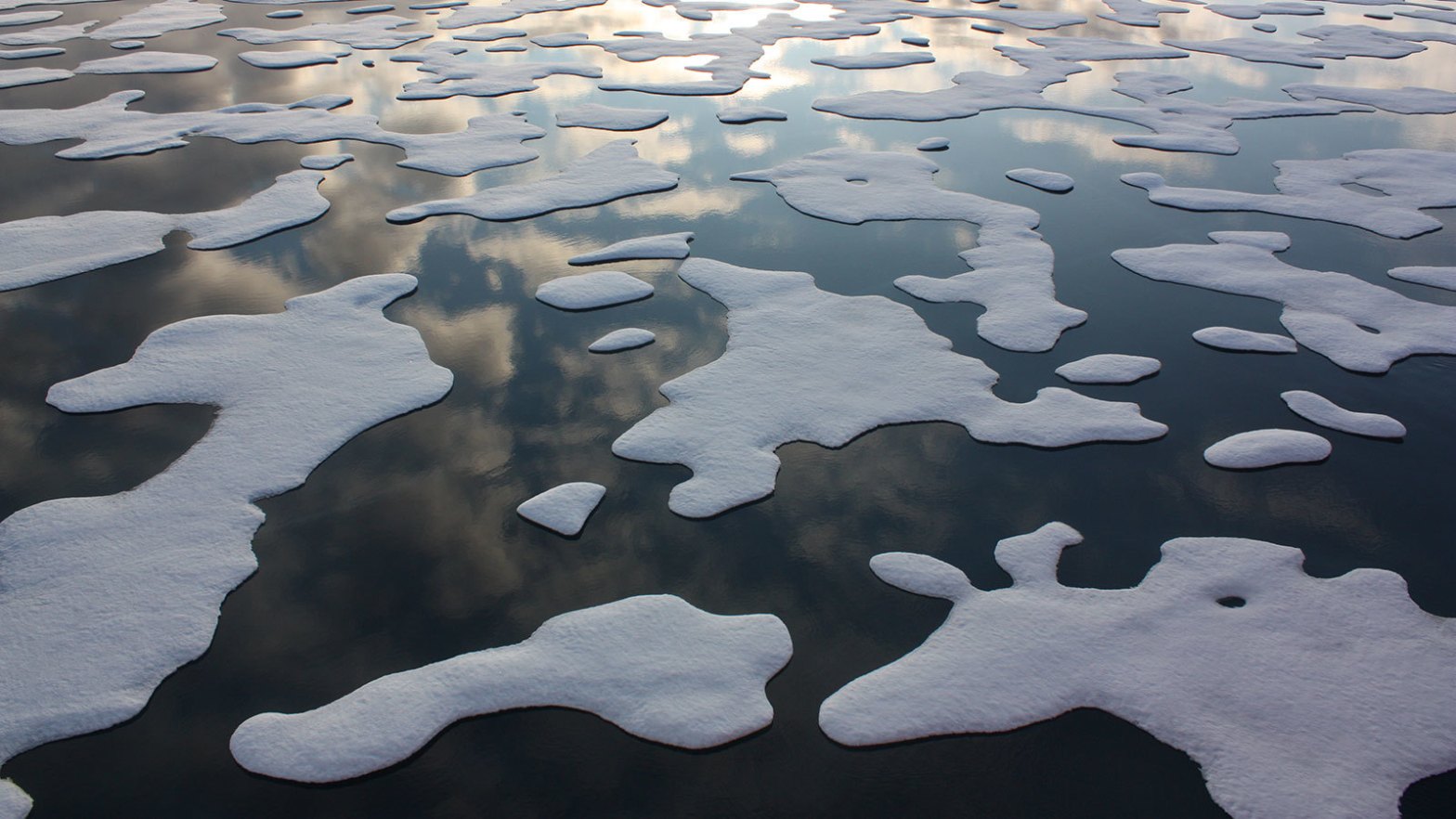
Earlier in March, temperatures around the North Pole approached the melting point, right around the time of year that Arctic sea ice is usually most extensive. In some places, the Arctic was more than 50 degrees Fahrenheit warmer than average. It’s part of an alarming trend; over the past 30 years the region has warmed four times faster than the rest of the globe. The shift is transforming the Arctic land- and seascape, causing sea ice to melt, glaciers and ice sheets to retreat, and permafrost to thaw. And while the Arctic is particularly vulnerable to climate change, it also has an outsized potential to contribute to global warming, as melting permafrost releases carbon dioxide and methane into the atmosphere.

And yet, just when the climate scientists and governments across the eight Arctic states should be working together to understand and address the climate crisis, Russia’s war on Ukraine has forced the Arctic Council, an intergovernmental group of Arctic states and Arctic Indigenous Peoples, to suspend their joint activities in protest of Russia’s unprovoked aggression.

“It’s so crucial for us to not lose sight of accelerating climate change, and to be making as much progress as possible,” Marisol Maddox, a senior arctic analyst at the Polar Institute of the Woodrow Wilson International Center for Scholars in Washington, DC, said. “And Russia’s invasion of Ukraine is creating serious challenges to that within the Arctic context, because of the way that that’s manifested with the pause of the Arctic Council, and all of its subsidiary bodies.”

Read more…

This article was republished by Undark as part of the Climate Desk collaboration.

Bulletin: O redwood tree, o redwood tree, can tree genetics save thee?

The devastating wildfires that ripped through California this year and last consumed nearly a fifth of the world’s giant sequoias, the largest trees on Earth by volume. According to official estimates, between 13 and 19 percent of the 75,000 sequoias over 4 feet in diameter were lost in just two years. While sequoias evolved with wildfire and need it to open their seed cones and to clear the forest floor so the seeds can germinate, the fires over the last two years—exacerbated by climate change-driven drought—were simply too hot.

Read more…