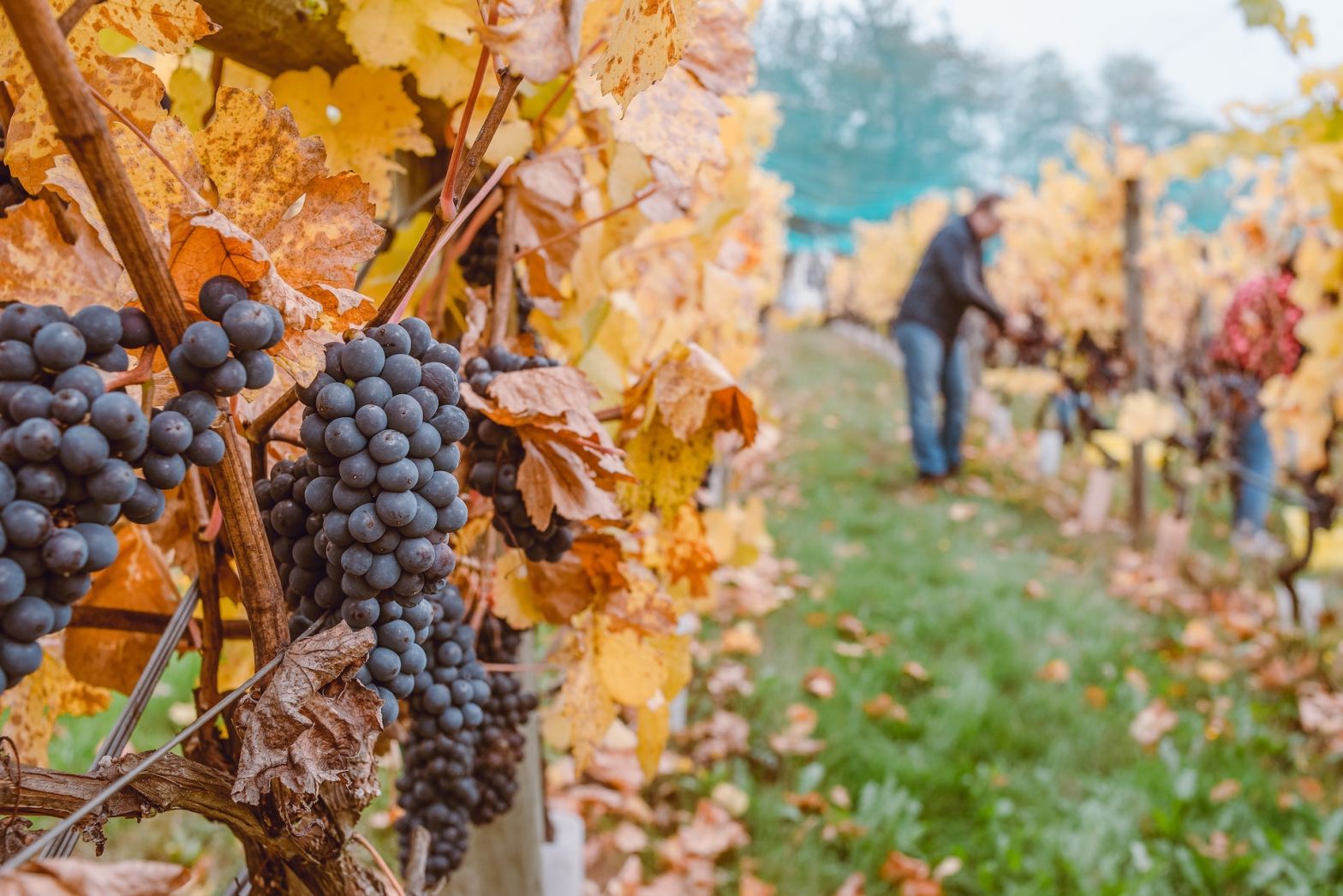
Bulletin: What these endangered wines tell us about climate crisis

“What do you think happened to this wine?”

I turned my attention to the bright cerise liquid in the last of our five glasses. It was lighter than the other two reds on the table. I took a sip, my amateur tongue probing for tasting notes that might reveal what climate trauma these grapes endured. Someone else beat me to it: “Smoke.”

After it was pointed out, I sensed it immediately: a bouquet of barbecue, a soupçon of combustion.

This was the 2020 Cloudline Pinot Noir from Oregon’s Willamette Valley. Oregon’s 2020 wildfire season was one of the most destructive in the state’s history, burning well over a million acres and killing 11 people. Nearly every wine-producing region in the state was impacted by either fire or smoke drift.

Read more…

Bulletin: Wonder in the time of climate crisis

I was prepared to loathe the new nature docuseries from PBS, “Evolution Earth.”

The press release crowed that the series “reveal[s] animals keeping pace with a planet changing at superspeed” and “tells a tale of resilience that redefines our understanding of evolution and hints at how nature can show a path towards a sustainable future for Planet Earth.”

This copy flew in the face of at least one article that recently passed through my inbox, which reported that even African wild dogs, a species adapted to the warm tropics, were suffering from hotter temperatures. Researchers found fewer pups were surviving to adulthood; the time between litters was getting longer; and adult survival was lower after bouts of hot weather. And that’s just one example of a species struggling to adapt to a changing climate. Certainly, the promotional materials made no mention of the ongoing extinction crisis, in which more than one million species are teetering on the brink of nonexistence.

The last thing society needed, I thought, was a feel-good series about how the animals will prevail during the climate and biodiversity crisis, while masking, circumventing, or denying the full extent of the damage humans have wrought on the Earth and its ecosystems.

But “Evolution Earth” walks a precarious tightrope, acknowledging irreversible losses in the same breath as it celebrates the unexpected and, yes, even hopeful adaptations of a few select species around the globe.

Read more…

Bulletin: Scrap solution: Burning tires to mine bitcoin

A bitcoin mine located at a waste coal power plant in Pennsylvania wants to add a new fuel to its power generation mix: scrap tires.

Stronghold Digital Mining describes itself as an “environmentally beneficial” bitcoin miner. But during a virtual press conference on Monday, Russell Zerbo, an advocate at Clean Air Council, said the facility, Panther Creek, had received at least seven air quality violations since it was acquired by the cryptocurrency mining company in 2021.

The press conference brought together representatives of local and national environmental organizations, including Earthjustice and PennFuture, along with residents of Carbon County—where the plant is located—to ask the Pennsylvania Department of Environmental Protection to reject Stronghold’s permit application for this new fuel source.

Read more…

Bulletin: From Montana fires to floods in Vermont: Interview with a climate migrant

This week Vermont (as well as parts of New York and Massachusetts) saw heavy rainfall resulting in catastrophic flooding in the state capital and other low-lying towns across the state. One man drowned in his home; hundreds of others were rescued or evacuated. The full extent of the damage to infrastructure and personal property will not be known for some time, and more rain is forecast for this weekend.

State climate assessments have already found that, because of climate change, Vermont is getting wetter: Precipitation is up 21 percent since the beginning of the 20th century, and the state sees almost two and a half more days of heavy precipitation annually than in the 1960s. Consequently, the state is at an increased risk for damaging rainfall and flooding. And yet Vermont has for several years now been positioning itself as a refuge for people looking to escape the worst ravages of the climate crisis.

“Climate change could be, in some ways, beneficial to Vermont,” Republican Gov. Phil Scott said in 2017. “When we’re seeing some of the activity in California today with wildfires and the lack of water in some regions of the country, if we protect our resources, we could use this as an economic boom in some respects.”

While events this week have underscored the reality that there is no escaping the climate crisis, it is true that people have moved to Vermont because the state is perceived to be safer than other places. Zack Porter, the co-founder of a regional environmental nonprofit called Standing Trees, chose to move with his family from Montana to Montpelier, Vermont, in 2018 to get away from the long wildfire seasons out West. The Bulletin reached out to Porter to ask him about experience as a voluntary climate migrant, and about his hopes and dreams for how Vermont will recover and rebuild from this disaster.

Read more…