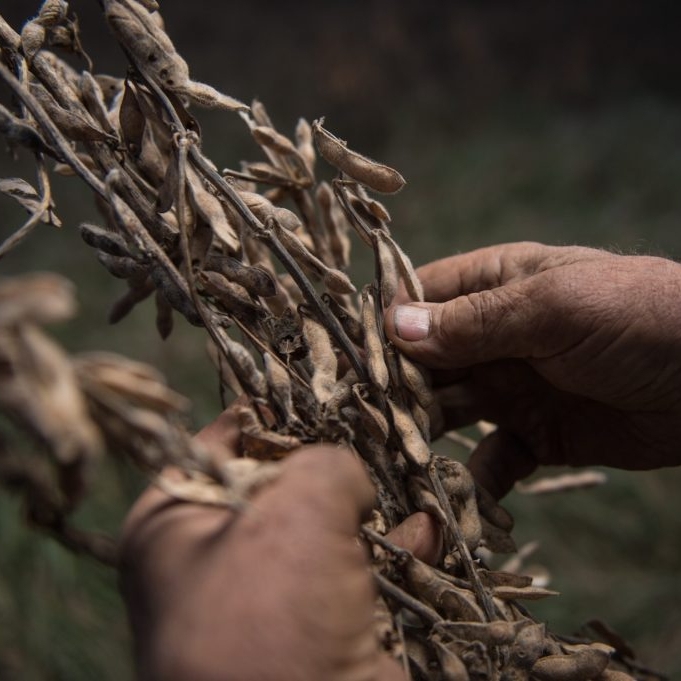
New Food Economy: The explosive dominance of soy over a century went unnoticed by most Americans—except for those growing it.

They were a fixture of the landscape as I was growing up, but I never stopped to wonder why that might be, or whether that might ever change. At least, I didn’t until soybeans began making headlines earlier this year. 

It’s a late weekday afternoon when I get the call inviting me to come ride. I quickly throw on jeans and boots and several layers to shield against the November chill. It’s a short drive, but when I pull off the road, the combine is already going full tilt, three to five miles per hour. Soon enough the John Deere is bearing down on me, towering 14 feet tall and nearly twice as wide, spitting out a cloud of dust that trails in its wake like smoke. I throw my hands up in greeting, and alarm. Read more…

New Food Economy: Soon we’ll use smartphones to trace our food on the blockchain. But there’s a catch: We’ll be traced, too.

Foodies interested in the provenance of their groceries may have to give up something in return: their privacy.

The “internet of everything” (IoE) is coming to a grocery store near you. With a tap of your phone, you’ll be able to find out where your heritage pork was raised and your bluefin tuna caught—in theory. Read more…

New Food Economy: The future of seafood is bait-to-plate transparency on the blockchain

Sometime soon, American eaters may be able to purchase tuna labeled with a QR code that can be scanned to reveal when and where the fish was caught, and by whom. This new blockchain project aims to prove that a completely transparent, traceable seafood supply chain is possible, and can curb misdeeds on the high seas. Read more…