Bulletin: (Almost) everything you wanted to know about tipping points, but were too afraid to ask

One of the most pressing questions facing climate scientists, and the world at large, is whether human-caused global warming could trigger changes in the climate system that will radically reshape the Earth as we know it. The evidence is mounting that these vast changes are not only possible, but increasingly likely as the Earth warms. But how close the world is to crossing these so-called “tipping points” is a matter of vigorous scientific debate.

The phrase “tipping point” was first coined by sociologist Morton Grodzins to describe segregation and white flight in the 1950s. It was later popularized in the early aughts by Malcolm Gladwell, who published a blockbuster popular science book called The Tipping Point, which looked at sudden social shifts through an epidemiological lens—how ideas spread like viruses. It wasn’t until 2008 that the metaphor formally entered climate science, when Tim Lenton and his colleagues published the paper “Tipping elements in the Earth’s climate system” in The Proceedings of the National Academy of Sciences.

The idea that there could be sudden and irreversible changes within the Earth’s climate system was not new. In the mid-20th century, scientists studying ice and sediment cores found evidence of abrupt warming and cooling periods in the Earth’s geologic history and inferred that abrupt climatic shifts could happen again. In past reports by the Intergovernmental Panel on Climate Change, these were called “climate surprises,” or the more cumbersome “large-scale discontinuities in the climate system.” But the tipping point metaphor caught on in a way these other phrases didn’t.
Read more…

Bulletin: ‘We’re losing our environmental history’: The future of government information under Trump

As the director of the National Security Archive’s Climate Change Transparency Project, Rachel Santarsiero is in the business of monitoring and facilitating the flow of information from the government to the public. What she’s seeing now, in the first weeks of President Trump’s second administration, is throwing the continuity of that process into doubt.

“We’re really losing our history here; we’re losing our environmental history,” Santarsiero told the Bulletin last week.

To some extent, government watchdogs, scientists, and climate and environmental activists were expecting this. During the first Trump administration, the use of terms like “climate change,” “clean energy,” and “adaptation” across federal environmental websites fell by 26 percent. In some cases, those terms were replaced by more ambiguous phrases like “energy independence” and “resilience”; other pages referencing climate change simply vanished.

But what Santarsiero and others are witnessing now goes far beyond that. Thousands of datasets have been removed from federal websites. Information on climate and the environment—from agencies like the EPA, the Council on Environmental Quality, NOAA, NASA, the State Department, and the Defense Department—has been deleted or become virtually impossible to find.

The administration’s wrecking-ball approach has raised profound questions about the integrity and future of vast amounts of information, public or not.

Read more…

Republished by Grist here.

Bulletin: A former EPA assistant administrator on US environmental policy in the age of Musk and Trump

Last Monday, Elon Musk bragged that he “spent the weekend feeding USAID into the wood chipper.” Is the United States Environmental Protection Agency next?

A three-prong assault by the Trump administration is already taking shape, aimed at staffing, funding, and regulations.

According to a ProPublica analysis, more than 300 career employees at the Environmental Protection Agency (EPA) have already left the agency since the election. This includes lawyers, engineers, biologists, toxicologists, emergency workers, and water and air quality experts. Last week, nearly 170 employees in the Office of Environmental Justice and External Civil Rights were placed on paid administrative leave. Many others are being encouraged to resign or threatened with dismissals.

President Trump signed an executive order in his first week in office pausing funding disbursements awarded through the Inflation Reduction Act or Bipartisan Infrastructure Law, and although courts have intervened to stop the spending freeze, funding for EPA projects has still not been released.

And by all accounts, Lee Zeldin, the new EPA administrator, is poised to begin rolling back a suite of environmental regulations, touching on everything from meatpacking plant pollution and fertilizer chemicals to coal ash contamination and greenhouse gas emissions from power plants.

To better understand everything going on at the agency and how these actions will reverberate over the next four years (and beyond), the Bulletin reached out to Mary Nichols, a former EPA assistant administrator and current professor at the UCLA Emmett Institute on Climate Change and the Environment.

Read more…

Bulletin: Memo to Trump: Five reasons to act on climate

Mr. President:

Where to begin? As soon as you regained the highest political office in the United States, you began the process to withdraw the country from the Paris Agreement, joining the exalted ranks of Iran, Libya, and Yemen—the only other countries not party to the agreement.

You proclaimed Alaska “open for business” for all kinds of resource extraction, from mining to timber, with special attention paid to liquified natural gas and other energy projects.

You declared a national energy emergency, even though the United States currently produces more oil and gas than any other country. You commanded federal agencies to “exercise any lawful emergency authorities available to them” to facilitate the production of domestic energy resources—but not wind! “We aren’t going to do the wind thing,” you said.

The editorial brief for this memo was “advice for the incoming president that he might actually take.” Does such a thing exist within the climate arena, Mr. President? I polled some Bulletin contributors to see what they would suggest.

Read more…

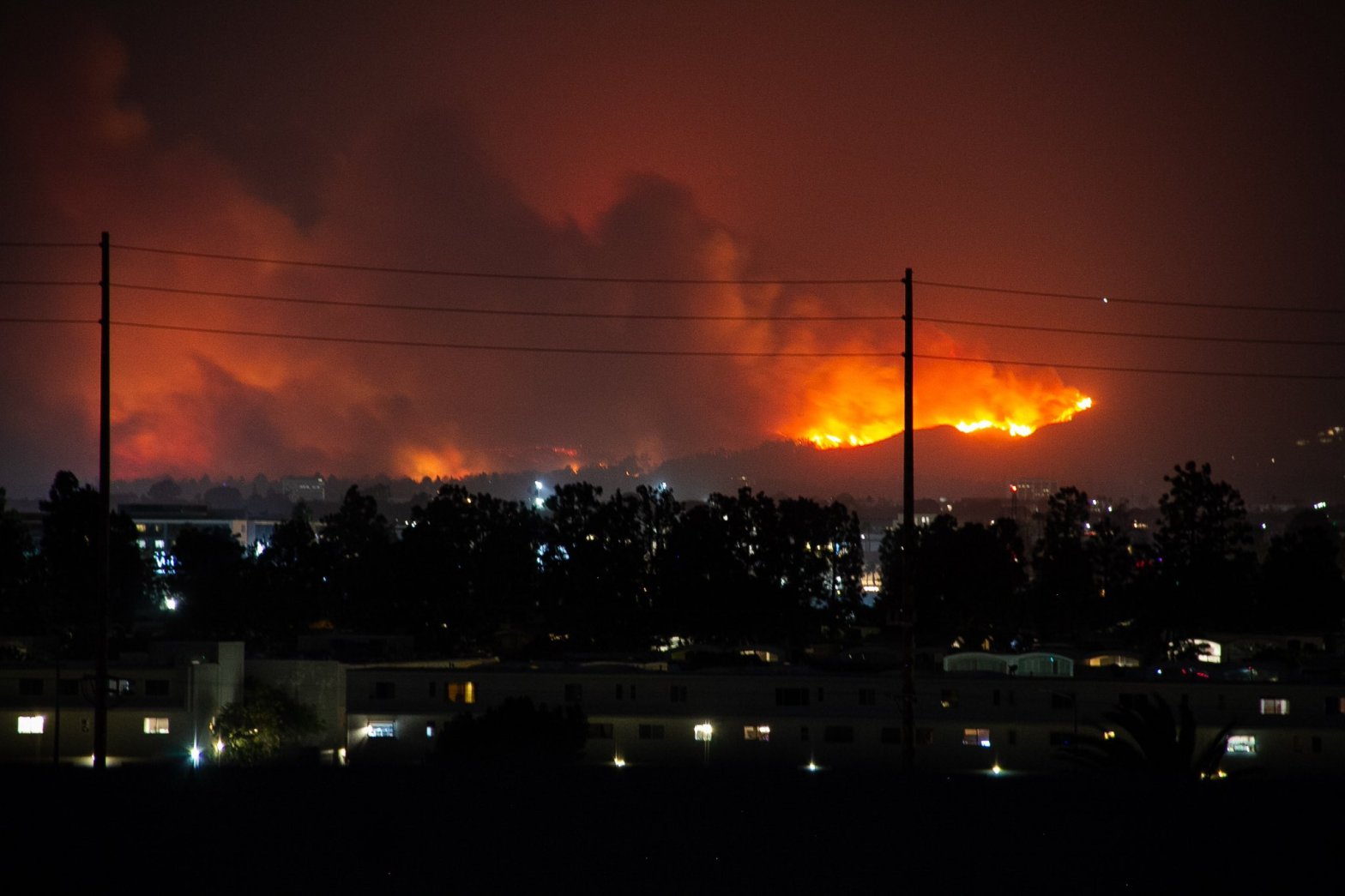
Bulletin: ‘Not enough firefighters’: Historic wildfires rage unabated in Southern California

Two people have died and more than 1,000 structures have been destroyed in wildfires raging in the Los Angeles area, according to Los Angeles County Fire Chief Anthony Marrone. Approximately 80,000 people have been ordered to evacuate, and thousands of structures are at risk.

The Palisades Fire has burned over 11,800 acres in the upscale Pacific Palisades neighborhood and is continuing to grow, with zero percent containment. The Eaton Fire, burning in the Angeles National Forest and in Pasadena, is now over 10,000 acres and continuing to grow, with zero percent containment. The Hurst and Woodley fires have burned over 500 and 30 acres, respectively.

Although the hurricane-force winds (which reached up to 100 mph) were expected to die down by midday, even the moderately high winds expected to continue through Wednesday evening will continue to make containment a challenge.

In a press conference Wednesday morning, Los Angeles Fire Chief Marrone bluntly stated that the region’s firefighting forces were not prepared for numerous wildfires of this magnitude: “No, L.A. County and all 29 fire departments in our county, are not prepared for this kind of widespread disaster. There are not enough firefighters in L.A. County to address four separate fires of this magnitude. The L.A. County fire department was prepared for one or two major brush fires, but not four, especially given these sustained winds and low humidities.”

Read more…